


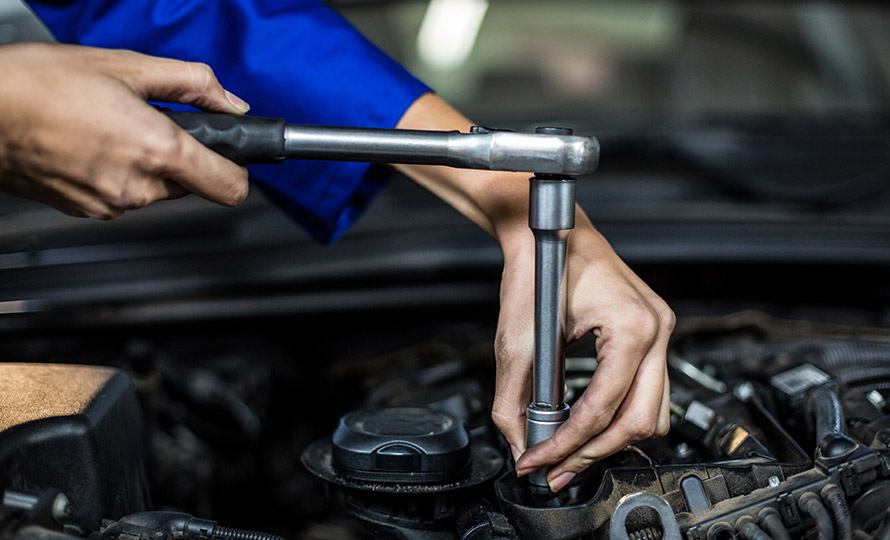
A torque wrench lets you tighten bolts and nuts precisely to the manufacturer's requirements, ensuring durable and safe joints. When choosing a tool, consider the required torque, the drive size and the type of work. We explain which torque wrench to buy so that it matches your individual needs.
What is a torque wrench used for and when should you use it?
A torque wrench is used to tighten bolted joints precisely to a specified torque value. It allows you to apply the tightening torque specified in the technical documentation for the joint. It helps you avoid over-tightening or under-tightening these components, which affects the quality, durability and safety of the joints.
Torque wrenches have a wide range of applications, including:
- tightening wheels,
- tightening engine components,
- bicycle and motorcycle servicing,
- suspension repairs.
A torque wrench is useful wherever a specific tightening torque must be maintained, both for joints exposed to high loads and for small, delicate components.
What types of torque wrenches are there?
The most popular types of torque wrenches are:
- dial (pointer) wrenches – allow you to read the applied torque in real time on a pointer scale or dial, depending on the design of the tool,
- electronic (digital) wrenches – equipped with an electronic measuring system and a display showing the torque; some models also measure the tightening angle and save results,
- click (adjustable) wrenches – with a mechanism that signals the set torque with a characteristic click,
- break-back wrenches – with a hinge that breaks when the set torque is reached, signalling the end of tightening.
Some modern tools use Bluetooth communication and allow wireless data transfer to a mobile app or a system installed on a computer.
How do you choose the torque range of a torque wrench?
The torque range (minimum and maximum), expressed in newton metres (Nm), must be suited to the type of work and the specifications of the components being tightened. Before buying a wrench, check the technical documentation of the vehicle, machine or component to find out what torque should be used to tighten it.
Do not choose a tool based solely on its intended use. Make sure the required value falls within the declared working range of the wrench and that the manufacturer guarantees measurement accuracy within that range.
|
Remember! You may need two different wrenches if you plan both precision work on small components and tightening joints that require high torque. |
Which drive size should you choose for a torque wrench?
The drive size of a torque wrench determines the type of sockets that can be fitted on the drive square and should be suited to the type of work:
- 1/4" – for tightening small components and precision work,
- 3/8" – a universal drive size for standard work on cars and two-wheelers,
- 1/2" – for tightening suspension components and wheels on passenger cars, among other things,
- 3/4" – for high-torque work, mainly on industrial machinery and steel structures.
A 1" torque wrench is used, for example, for tightening steel structure components or making flanged pipeline joints.
Need help choosing a torque wrench? Contact the Torque Shop advisors by phone, by email or using the contact form.
Which torque wrench should you choose for specific applications?
Wondering which torque wrench to choose so that it matches the type of work and the required torque?
The table below shows example applications of torque wrenches and practical tips for choosing tools.
Table. Examples of torque wrench applications
|
Occasional car wheel changes |
Mechanical 1/2" click wrench with a range covering the tightening torque recommended by the manufacturer |
|
Minor bicycle work |
1/4" wrench designed for low torque values |
|
Professional repair of various vehicles |
Two or more wrenches with different working ranges |
Which torque wrench is the best choice for a car?
If you need a wrench for changing spark plugs in a passenger car, consider a 1/4" model with a torque range of e.g. 5–30 Nm, provided it covers the torque required by the spark plug and engine manufacturer.
From our experience, a 1/2" tool with a range of 40–200 Nm is suitable for tightening wheels on most cars, e.g. the King Tony 34462-1DG wrench, which we supply with a calibration certificate.
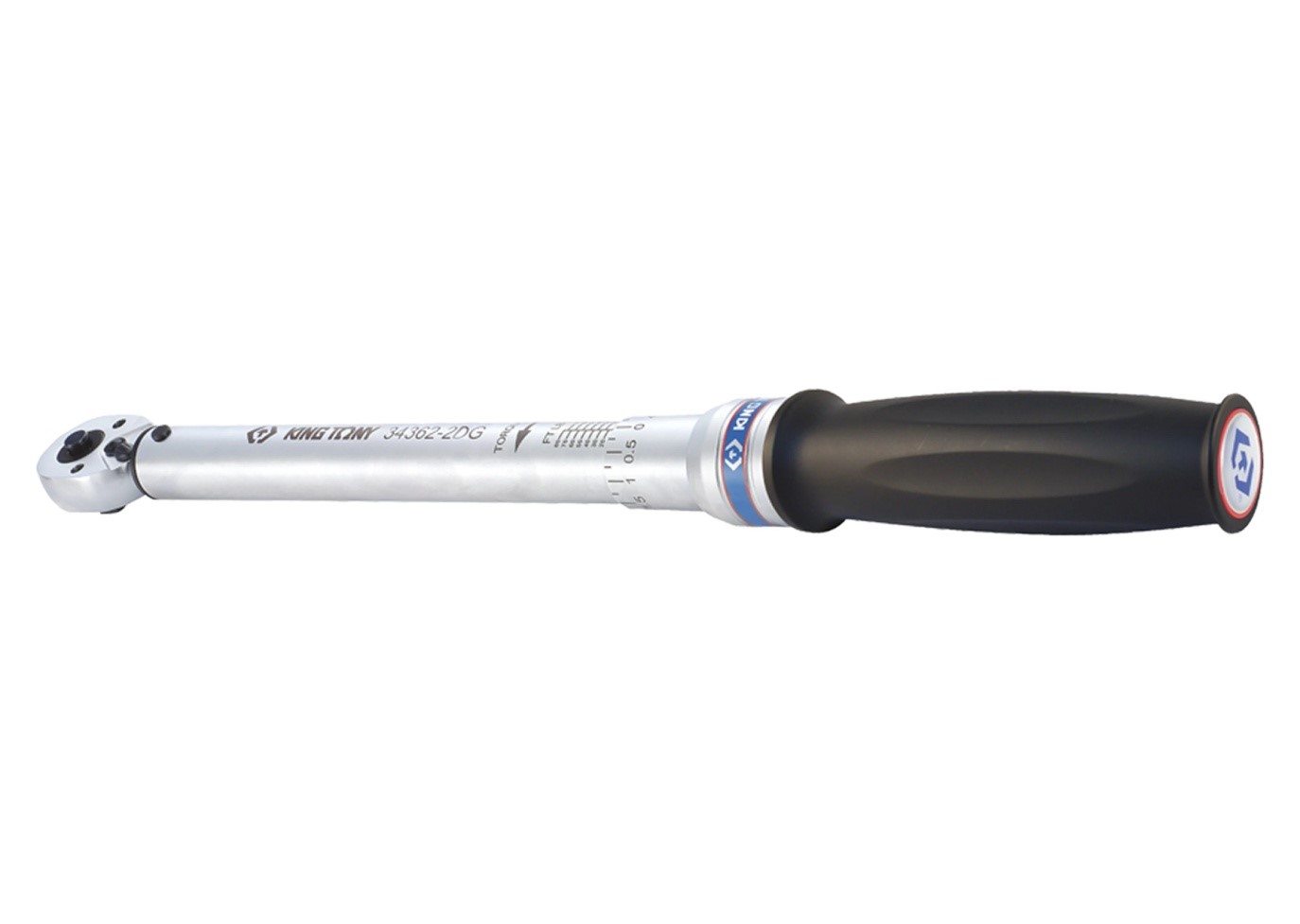
The range of the King Tony 34462-1DG wrench covers the wheel tightening torques used in many passenger cars, and its ±3% accuracy in the clockwise (CW) direction allows you to control the applied torque.
However, check the car manufacturer's specification first, as it will help you choose the right torque wrench.
What range is right for trucks? These vehicles often use wrenches with a 3/4" or 1" drive designed for high torque. However, the exact range must be matched to the vehicle manufacturer's requirements.
Which torque wrench should you buy for bicycle work?
For professional assembly and inspection work, consider the Stahlwille MANOSKOP 714R/2. It is an advanced electronic wrench that allows you to control both torque and tightening angle. For occasional servicing of your own bike, a simpler and cheaper mechanical model with a suitable range is usually enough.
Low tightening torques are often required, for example, when mounting shifters or handlebar clamps. For drivetrain components such as pedals, cranks or bottom brackets, you need a wrench with a higher range, from approx. 35 to 50 Nm.
Which torque wrench should you choose for cylinder heads?
For tightening cylinder head bolts, it is best to choose a wrench with a range matched to the values specified by the manufacturer of the specific engine, also taking into account the prescribed assembly procedure. In many engines, the bolts must be tightened in a specific sequence and, after reaching the specified torque, turned by an additional angle. In this case you will also need a torque angle gauge or a wrench with an angle measurement function.
Which parameters should you look at when buying a torque wrench?
When choosing a torque wrench, pay attention to:
- measurement accuracy – defines how far the wrench reading may deviate from the actual torque; the smaller the permissible error, the more accurate the measurement,
- material – important if the tool is to be used in demanding conditions, e.g. on industrial equipment,
- additional functions – e.g. two-way Bluetooth communication or the option to set an additional checkpoint for the torque value,
- documentation and calibration options – make sure the manufacturer supplies a document confirming that the wrench parameters have been checked and that the tool can be periodically calibrated and serviced.
Also check whether the scale on the wrench is engraved or protected by a cover. This prevents it from wearing off over time.
How should you use and store a torque wrench correctly?
Set the torque wrench to the correct torque value in line with the requirements of the manufacturer of the component. On mechanical models, this requires unlocking the adjustment knob or screw. If you use a digital wrench, switch it on and set the required value using the buttons.
Fit the correct socket on the wrench and make sure it is properly seated on the bolt or nut. Hold the tool at the point indicated by the manufacturer and tighten slowly with a smooth motion, without jerking. If you use a click wrench, stop tightening after the first click. Applying further force may exceed the required torque.
A torque wrench should be stored in a place where it will not be exposed to mechanical damage, extreme temperatures or dirt. Ideally, keep it in its original case. Remember to clean the body of the tool thoroughly with a dry cloth beforehand.
Does a torque wrench need calibration?
We recommend calibrating a torque wrench every 12 months or after 5,000 cycles, while also taking into account the manufacturer's recommendations and the intensity of use. Calibration is also advisable if the tool falls onto a hard surface or is overloaded (the maximum torque is exceeded).
At Torque Shop we provide professional service and calibration of torque tools to help you maintain the quality of the equipment in your workshop.
FAQ
Which torque wrench should you choose for motorcycle wheels?
For motorcycle wheels, you can choose a 1/2" wrench with a range of 40–200 Nm. For smaller two-wheelers, a 1/2" 25–125 Nm model may be suitable.
Where can you buy a torque wrench?
You can buy a torque wrench in a shop specialising in this type of tool, e.g. Torque Shop, which offers a wide selection of products from reputable brands. It also offers service and calibration of wrenches and other tools.
How many Nm should a torque wrench have?
The range of a torque wrench, expressed in newton metres, should match its application. For example, a 1/2" model with a range of 28–210 Nm is a universal solution for passenger cars.